
Research and infrastructure / Analysis
Microsoft Maia: why the AI race is also decided by chips
Maia 200 in production and Maia 300 on the 2027 horizon: the physical infrastructure shaping the AI race.
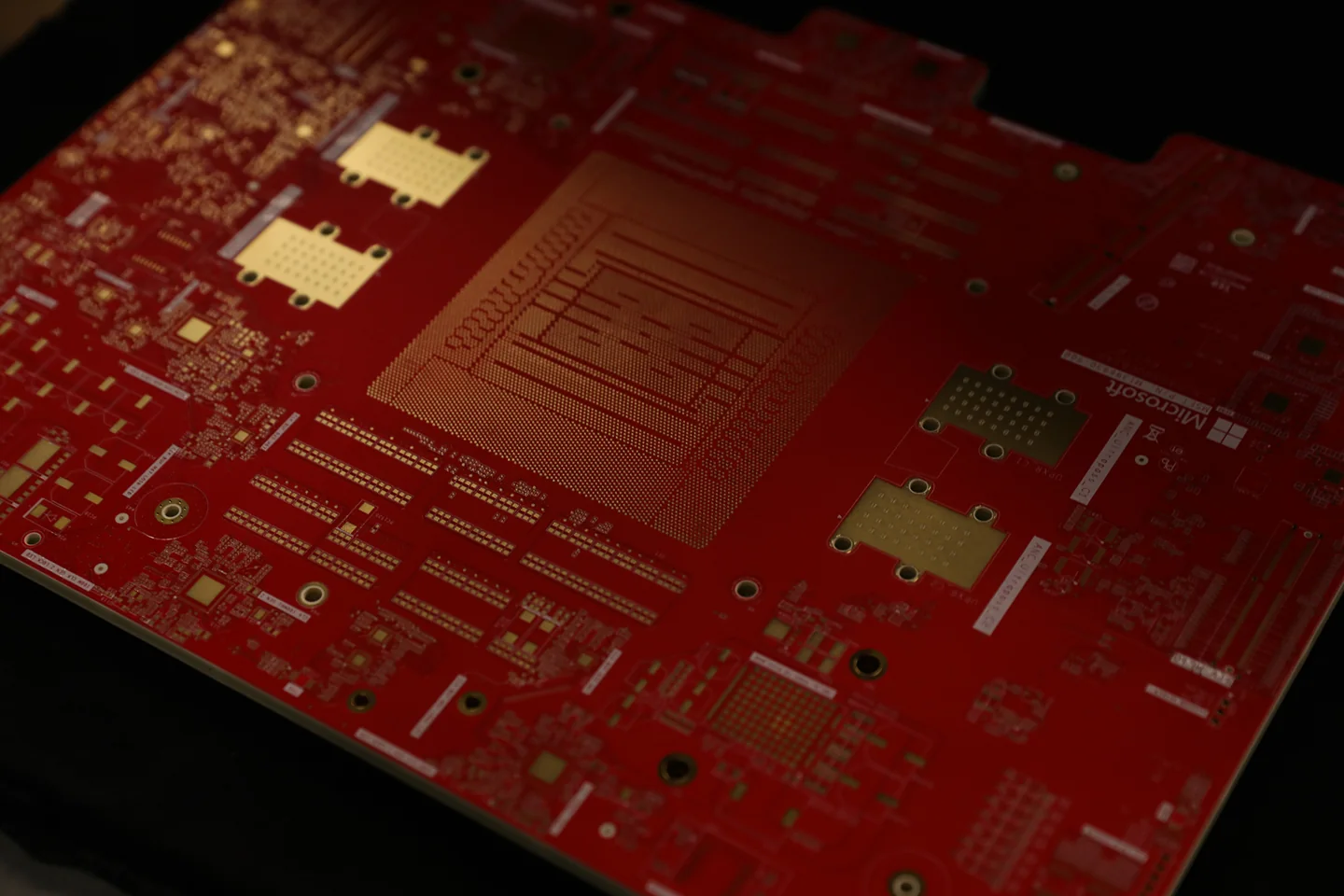
Model launches dominate many AI headlines, but the hardware running them also shapes the market. Microsoft's Maia announcement offers a look at this less visible layer: infrastructure that must support continuously used services. [Microsoft]
The company distinguishes current Maia 200 work from planned Maia 300 deployments. That chronology is essential. A production forecast is not capacity already available everywhere, and manufacturer estimates must be read as such.
What is in production, and what is planned?
In its 12 October announcement, Microsoft places Maia 200 in production workloads and plans Maia 300 deployments for 2027. The board photograph accompanying this article shows a Maia 300 prototype. It illustrates the presented hardware, but does not prove the announced deployment is complete. [Microsoft]
Inference means running an already trained model to answer a request. For a service, the goal is an acceptable response time, capacity to meet demand and maintained quality. A chip is one part of that chain: memory, networking, software and workload organisation also matter.
An efficiency figure therefore needs a clear unit and boundary. Does it measure the processor, server or entire facility? Does it concern a short request or a long task? Was quality maintained? These are questions for interpreting evidence, not results from our own tests. They prevent a gain measured in one component from being attributed to the whole service.
The market implications remain open. Custom hardware may be part of a capacity and cost strategy, but effects on prices or availability must be documented when they occur. The announcement provides a direction and timetable. Follow-up should examine what is deployed, for which workloads and with which comparable measurements.
Using a model has a physical cost too
Training is only part of a system's lifecycle. Each use requires resources to process a request and generate a result. At high volumes, how computation is organised can shape service capacity.
AI analysis therefore cannot stop at which model performs best on a test. It also matters what resources it uses and how it behaves when many people or applications use it simultaneously.
Greater efficiency does not guarantee lower total consumption
If infrastructure needs fewer resources per task, that task may become more efficient. But overall consumption also depends on usage volume. An improvement per request does not, by itself, demonstrate lower total service consumption.
This distinction helps readers interpret chip and data centre announcements. Units, measurement conditions and workload types matter. Comparing figures without this context can create a sense of precision the evidence does not support.
Infrastructure also shapes dependencies
Our reading is that hardware design is part of providers' strategy. Organisations purchasing AI services should watch how that strategy affects availability, terms and continuity, without assuming a specific effect before it occurs.
Maia matters because it highlights several layers of competition. Models, applications and chips advance together, but each announcement needs its own evidence and timeline.
Sources and references
- Microsoft to expand Azure Maia system to multi-gigawatt deployments ↗Microsoft · 12 October 2026 · Primary source
- Microsoft Maia gallery and context ↗Microsoft · 12 October 2026 · Primary source
Prepared with AI assistance. Editorial policy and corrections.